
Staying Connected: Industry Professionals Share Their Views

Staying Connected: Industry Professionals Share Their Views

It is more important than ever that the industry stays connected and comes together to define the next era of air travel.

That’s why we hosted our first Twitter Live chat, inviting aviation professionals and enthusiasts from all corners of the sector to come together and share their views on the future of aviation and the passenger experience.

We asked our followers a series of 10 questions on everything from passenger confidence to how aviation operations can rebound from the coronavirus crisis. Here’s what the aviation brands, experts and enthusiasts who joined us had to say.

A time to work together

Highlighting the importance of collaboration and innovation during the crisis, followers shared their stories about the industry’s efforts to respond to, and survive the COVID-19 crisis.

AIX exhibitor, Tronos Aviation Consulting, revealed it has reallocated its additive manufacturing capabilities and capacities to emergency medical equipment for health professionals. Not only that, but the company has also donated all its PPE.

Also helping out frontline workers, Runway Girl Network highlighted how Raytheon Technologies’ Collins Aerospace Interiors unit is producing 3D printed headbands for face shields in aid of the COVID-19 fight.

Elsewhere, airline content marketing agency, Spafax, told us how it’s pivoting towards new creative concepts for passenger IFE and communications, as well as streamlining its infrastructure in the cloud. It confirmed that new platform partners and products are being planned to give airlines expanded choices when the recovery begins.

Then came the million-dollar question: what will the future of aviation look like?

While the future at this stage is still uncertain, the majority of participants agreed that aviation will look very different in the short to medium term. There will be a far greater focus on digital and automation across many stages of the customer journey.

Some noted that perceptions of travel have changed and, as we move towards the ‘new normal’, topics such as the contactless cabin and sustainability will be front-of-mind.

The discussion raised some debate around whether passengers will feel cautious about flying and what airlines and manufacturers can do to give passengers peace of mind. Though it will be a combination of factors, commenters agreed that sanitising standards would be important to reassuring passengers to return to the skies.

New sanitisation solutions onboard

SEKISUI KYDEK believes a renewed passenger focus on sanitation will increase demand for materials that are chemical resistant, inherently antimicrobial and will not be stained by harsh cleaning agents. As such, there will be an emphasis on patterns that mimic texture but are flat and don’t trap bacteria.

To ensure consumer confidence, many argued that airlines need to be transparent and open about their improvements and ensure cabin crews are prepared to enforce rules like wearing masks so that passengers comply. However, others raised questions on how difficult screening measures and rules could be when taking into account non-coronavirus medical issues such as common colds and seasonal allergies.

All change for Aircraft Interiors?

When asked if aircraft interiors need a massive overhaul or if small changes will suffice, many agreed that the industry doesn’t have the capital to afford major changes in aircraft interiors. There was consensus that simple retrofits combined with increased public knowledge of cabin cleaning solutions will be the first step to get the industry moving again.

Looking further ahead, one user commented that more consideration is required to help win back passenger confidence, especially flying in non-premium cabins where space is limited.

Considering how the passenger experience may change, many participants agreed that inflight cleanliness will be important as passengers try to touch as little as possible. Further to this, some raised questions about inflight magazines and noted that digitisation is likely to be accelerated by COVID-19.

Another user highlighted how passenger dehydration caused by low moisture content in the air lowers the immune system and therefore increases the risk of infection. They asked: “will airlines need to realign inflight services to improve passenger wellbeing, such as limiting alcohol consumption and only offering healthy foods?” While we don’t have all the answers yet, our co-located exhibition WTCE has been looking at how this area of air travel will change over the coming months.

Exciting products in the spotlight

As our followers were unable to see new innovations first-hand at Aircraft Interiors Expo this year, we asked our exhibitors to share what visitors would have discovered on their stands. SEKISUI KYDEX said they were excited to show their X-Rite Colour’s Total Appearance Capture (TAC) Ecosystem.

Press Reader also highlighted its sustainable, affordable and safe solution to give passengers access to newspapers and magazines. They also allow passengers to see menus, duty-free magazines and other traditionally printed materials in the post-pandemic world.

Keeping the industry connected

Despite the challenges facing the aviation industry as we emerge from the COVID-19 pandemic, all parties agreed that the sector is ripe for innovation.  We can expect to see lots of exciting new ideas both in the air and on the ground.

While it is clear that the aviation industry faces unique challenges on the road to recovery, the passion and determination among industry professionals to stay connected and return stronger are universal. We’d like to thank everyone who took part and hope you’ll join us for the PEC Virtual Series. Speakers from across the industry will join us for a series of weekly webinars to discuss the challenges facing our industry and explore new solutions.

If you missed the live chat and would like to add your thoughts in the comments below, we would love to hear from you. Or, join the conversation on Twitter by following @aix_expo and use #AIXStayConnected to join the discussion with the AIX community on our social channels.

Sign up for the latest exhibition updates and industry insights here

Passenger Experience Conference goes online with PEC Virtual Series

Passenger Experience Conference goes online with PEC Virtual Series

Reed Exhibitions, organisers of the renowned Passenger Experience Conference (PEC), has announced details of its first-ever six-part virtual webinar series that will run weekly from 17 June through to 22 July. The series of free online webinars will debate some of the biggest problems facing the aviation industry in the post-pandemic world and how they can plan for the future.

Representatives from Tronos Aviation Consulting, Viasat, Tapis Corporation, DesignWorks, Williams Advanced Engineering and Diehl Aviation, are among those coming together to discuss a range of important topics.

Weekly sessions bring together industry visionaries

Running in place of this year’s face-to-face event, which normally takes place ahead of Aircraft Interiors Expo (AIX) and World Travel Catering & Onboard Services Expo (WTCE), the PEC Virtual Series will provide cabin interiors professionals with the latest insights, ideas and analysis from the people and businesses that are driving the evolution of the passenger experience.

Each week, a panel of industry experts will come together to discuss the current issues impacting the future of the passenger experience industry, including:

  • Wednesday 17 June – Outlook for aircraft interiors: Airlines and their interiors supply chain partners are facing unprecedented challenges, with much of the world’s fleet grounded due to the COVID-19 pandemic. As the aviation industry prepares for a return to air travel, the first PEC Virtual Series webinar will address the outlook for interiors specification programmes and reconfiguration projects. Moderator Andrew Doyle, Director Market Development, Cirium will be joined by speakers Gary Weissel, Managing Officer at Tronos Aviation Consulting, Rob Morris, Global Head of Consultancy at Ascend by Cirium, Don Buchman, Vice President, Commerical Aviation, Viasat, and Matthew Nicholls, Sales Director at Tapis Corporation, will share insights from the industry’s key market segments.
  • Wednesday 24 June – Returning to air travel: Solving the MRO, modification and retrofit pain points : In the second PEC Virtual Series webinar, Nicole Noack, Managing Director at Independent Aircraft Modifier Alliance; Cristian Sutter, Vice President Commercial Aviation Strategy at GDC Technics and Frederic Dupont, Vice President Technical Sales and Customer Services, Etihad Engineering will come together to discuss how reassurance for passengers will dominate the requirements of maintenance and cleaning regimes as well as modification and retrofit initiatives. This online session will ask important questions such as what impact will more stringent cleaning regimes have on seats, monuments and materials and OEM warranties; and what consequences will it have on the regulatory landscape?
  • Wednesday 1 July – Thinking like a disruptor: Technologies embedded in materials, or that emulate the natural user experience have the power to transform passenger interactions within the cabin. Leading the discussion, Johannes Lampela, Director of Design, Los Angeles, BMW Group Designworks, will explore the new opportunities to harness disruptive technologies to both support travellers and ensure a safe flying environment.
  • Wednesday 8 July – Insights into Innovating Aviation: Moderator Bernd Knobe, Managing Partner at umlaut consulting, will be joined by Aurélie Germain, Airline & MRO Industry Value Expert at Dassault Systèmes and Roland Naudy from the Airbus Aircraft Interiors Marketing Team, to offer insight into the initiatives and methodologies that aviation leaders are deploying to encourage innovations that will transform experiences and encourage passengers to return to air travel.
  • Wednesday 15 July Developing lightweight products for the cabin: The penultimate PEC Virtual Series webinar will welcome industry experts, including Ben Orson, Managing Director London at JPA Design, Stu Olden, Senior Commercial Manager at Williams Advanced Engineering, and Nigel Smith, Managing Director & Head of Design at SWS Certification Services. They will address the opportunities to reduce both fuel usage and the CO2 footprint of aviation using lightweight materials and Formula 1 derived technology in the aerospace cabin market. Attendees will also gain an exclusive look at Project AIRTEK – an 18-month Aerospace Technology Institute/UK government sponsored programme to deliver a novel and innovative lightweight composite business class seat structure.
  • Wednesday 22 July – Returning to air travel: How data and tech can help meet the needs of passengers : The final PEC Virtual Series webinar for the summer will see Patrick Prefontaine​, Vice President Business Development at Fethr a Black Swan Company, Jaime Moreno, Chief Executive Officer at Mormedi, and Helge Sachs, Senior Vice President Product Innovation at Diehl Aviation, consider how data and technology can help meet the needs of passengers in the post-pandemic world. The session, moderated by Dr Stathis Kefallonitis, Founder & President, branding.aero will offer insights from passengers and consider how the adoptions of technologies, including AI, machine learning, biometrics and access to high-speed broadband, will help meet the expectations of travellers in the “new normal” once restrictions are lifted.


Speaking about the Passenger Experience Conference, Polly Magraw, Event Director, said:

“The aviation industry faces unprecedented challenges and more than ever, we recognise the importance of facilitating a space for professionals to learn from their peers, share knowledge and support each other during this time.

“The PEC Virtual Series will enable us to deliver the first-class insight associated with the Passenger Experience Conference and co-located events, and we’re delighted to bring many of the sessions and speakers confirmed for this year’s event online. Taking place over six weeks, we look forward to providing a platform for industry experts and professionals to continue the discussion so the industry can take off and soar once again.”

For more information, visit https://www.passengerexperienceconference.com/

Interview with: Zuzana Hrnkova, ATR Aircraft

Interview with: Zuzana Hrnkova, ATR Aircraft

The Aircraft Interiors Expo (AIX) team sat down with Zuzana Hrnkova, Vice President of Marketing at ATR, as part of our Women in the Aviation series.

This series of interviews aims to shine a spotlight on notable women in the industry and the diverse career opportunities in the sector.

Zuzana believes aviation is in her DNA. With a private pilots license and Aeronautical Engineering degree, Zuzana brings an innate understanding of aviation to her role at ATR.

Here, she reveals her career highlights and why she believes the evolution of the passenger experience is key for further industry success.

Zuzana, how long have you worked in the aviation industry?

“I started in 1994 with Airbus, so I have 26 years’ experience in the aviation industry.”

How did you get into the industry?

Planes are in my DNA. My grandfather was a pilot, my uncle is a pilot, I received my glider licence when I was 18 and PPL when I was 22. This passion for aviation led me to study Aeronautical Engineering in Slovakia and then also in France. I was then hired by Airbus just after my diploma training.”

What is it about working in the aviation industry that appeals to you?

“The possibility to connect people and places, bringing the world closer and making it more accessible. Also continuous innovation, not only on the technological side but also in terms of customer experience.”

“More diversity enriches both the working environment and our capacity to innovate.”

Zuzana Hrnkova

As a woman, how do you find working in such a male-dominated industry?

“Well, I’ve never felt strange, as I’ve been used to the low percentage of women since University. I followed a degree in Aeronautical Engineering, and it seems that this branch tends to attract men. Then I was used to a ratio where about 10-15% were women.

The good news is that this is improving these days and at ATR as a company, we talk about greater than 25% female representation. In my team of 20 people, I’ve achieved 40%!”

Have you encountered any gender discrimination in your career?

“Based on my own experience, during my study and working/professional life, I’ve never had any bad experiences. I think it is very important to understand that no matter which gender, we all have a value to add to this industry. As an employee, I have two “diversity hats”; I’m Slovakian and female, and honestly, I believe that my contribution coming from a different cultural background and point of view has continuously contributed to enriching my working environment.”

“Being transparent and being yourself is your big strength!”

Zuzana Hrnkova

As a female senior leader, why do you think it’s important for companies to address the gender gap?

“More diversity enriches both the working environment and our capacity to innovate. What do you believe has been the key to your success? I’ve always tried to create the value, use my differences positively and stay true to myself, following my fundamentals and values.”

What characteristics do you believe women need to survive in the aviation industry?

“Be passionate, know how to exploit your unique features, never give up and don’t lose sight of the lesson.”

In your opinion, what is the biggest obstacle to women succeeding in the workplace?

“There seems to be a pressure where women try to be ‘superwomen’ in terms of their work/life balance and then feel guilty for wanting both… It is important to ask for help when needed!”

What would you say has been your career highlight to date?

Working on the development of the A350XWB as it was a chance to work on clean sheet design aircraft. Moving to ATR has also been a highlight. It has encouraged me to push myself out of my comfort zone and create a fantastic team, as well as implementing new tools and ways of working.”

What’s the best piece of advice you’ve ever been given?

“Don’t try to hide your emotions. Being transparent and being yourself is your big strength!”

What do you believe is the biggest challenge facing the aviation industry?

Climate change is a concern for each and every one of us, and all transport modes produce external environmental impacts, including noise, pollution and greenhouse gas emissions. As air traffic grows, especially to power the emerging economies of the world, aviation needs to balance that growth to control our impact on the climate.”

What do you believe has been the biggest development in air travel over the past 25 years?

“For me, the biggest development in air travel has been seen in the passenger experience domain, by shifting from engineering-driven design criteria to passenger experience-driven criteria.

“Planes are in my DNA.”

Zuzana Hrnkova

The main quantum leap was done in the high yield segment, where the passenger experience is comparable with private jets while maintaining reasonable space efficiency and airline economics.”

If you could change one thing in the aviation industry, what would it be?

“Improve the pre-flight experience by improving all stressful and time-consuming steps before you finally board the aircraft.”

About Zuzana Hrnkova

Zuzana Hrnkova has 26 years’ experience in the aviation business and joined ATR, the European turboprop manufacturer and the world leader in the regional aviation market in 2015 as Vice President Marketing.

She leads the team responsible for market strategy, airline marketing and product development and continues to extend her long-lasting experience in aircraft interiors to the regional segment. Previously Zuzana worked at Airbus and her last assignment was Head of Aircraft Interiors Marketing, where she led the Aircraft Interiors Marketing team, covering all current and future Airbus cabins.

One of her main tasks was to guide new cabin product developments ensuring that cabin design fulfils all passengers’ and airlines’ expectations.


Interview with: Nicole Noack, Lufthansa Technik AG

Interview with: Nicole Noack, Lufthansa Technik AG

The Aircraft Interiors Expo (AIX) team sat down with Nicole Noack, Head of Independent Aircraft Modifier Alliance (IAMA) at Lufthansa Technik AG, as part of our Women in the Aviation series.

This series of interviews aims to shine a spotlight on notable women in the industry and the diverse career opportunities in the sector.

Nicole, how long have you worked in the aviation industry?

“I have been working in aviation since 2003 across multiple functions in heavy and base maintenance as well as aircraft modification at Lufthansa Technik AG.”

How did you get into the industry?

“I graduated in Computer Science, so my personal skills and interests have always been technical. After a few exciting years being part of the so-called dotcom era in the late nineties/early 2000s, I was looking for a challenging position in a very technical environment.

Living in Hamburg, the aviation industry was not only an obvious option but also a personal passion, which up until that point was purely a fascination for aircraft from a passenger point of view.”

What is it about working in the aviation industry that appeals to you?

“The physics used to enable a multi-tonne aircraft to take off safely and move people through the air over oceans and continents is just fascinating. Knowing the efforts required to design an aircraft, maintain and operate it, modify it and adapt it to the latest safety regulations – and passenger demands – is a life-time’s work with very different nuances. Working with any aircraft brings huge responsibility and I am always proud to see it taking off knowing I might have touched it in one way or another.”

As a woman, how do you find working in such a male-dominated industry?

“I have always felt very comfortable working in a so-called “man’s world”. When I started with Lufthansa Technik, I soon switched to a position close to aircraft technics, leading a team of highly qualified inspectors in heavy maintenance. I never felt I was judged as a woman, but as a person and by my knowledge and ability to learn. I have always worked with incredible colleagues in my respective departments and I am still very much enjoying it.”

Have you encountered any gender discrimination in your career?

“I have always brought my own skills and beliefs to my job and while they might not always fit into the environment, I have personally never had to deal seriously with gender discrimination by myself. I have always been lucky to have very supportive superiors, especially during the time I started my family.

“However, women in aviation, at least in the technical field, are still not very common.”

Nicole Noack

It was a balanced give-and-take set-up and I am still grateful I got the chance to go into a management position back then. That said, I do encounter gender discrimination around me, particularly when it comes to stereotypes and prejudices; there’s always the feeling that as a woman you first have to prove people wrong before being taken seriously.”

As a female senior leader, why do you think it’s important for companies to address the gender gap?

“I deeply believe in the concept of diversity as a whole. Different genders, cultures, nationalities etc all bring their own unique ways of thinking based upon the experiences they’ve had in life. To give everyone a voice and acknowledge them means to see the business through a wider lens – and to develop it in a more successful way.

Beyond that, I think it is a prerequisite to build on the concept of diversity, not only as a business but within society as a whole.”

What do you believe has been the key to your success?

“I believe in people and their individual strengths and needs, regardless of whether they are male or female. As a leader, I have found that celebrating diversity has always brought success as well as an acknowledgement from more senior management.

“No matter how fast technologies develop or how fast the run is to lead a new market, safety must always come first.”

Nicole Noack

Once given the opportunity, I felt it was in my hands to develop my career. But I still believe gaining that first trust was the key to moving forward professionally.”

What characteristics do you believe women need to survive in the aviation industry?

“I don’t think there is a general answer to this. There are so many different job roles in aviation, and each requires a different set of characteristics. When it comes to a career in aviation, my advice would be to be aware of your own strengths and boundaries, be confident about them, develop a certain degree of stamina and learn to be comfortable with feeling uncomfortable sometimes.”

In your opinion, what is the biggest obstacle to women succeeding in the workplace?

“Usually, people feel comfortable when they are surrounded by colleagues similar to them, particularly when they are in a situation they consider to be ‘the norm’. However, women in aviation, at least in the technical field, are still not very common. It is still unusual, simply because there are fewer women than men in the business. So for me, I would say the biggest obstacle is not being visible enough.”

What would you say has been your career highlight to date?

There hasn’t been just one, there have been many highlights throughout my career -from the first heavy maintenance of an A346 with lower deck facility to the B747 maintenance check flight in Manila that my team accompanied.

“Working with any aircraft brings huge responsibility.”

Nicole Noack

I also worked with a senior Lufthansa captain in Beijing, integrating people into teams that no one believed in before. The most recent highlight certainly was the moment we officially launched the Independent Aircraft Modifier Alliance (IAMA) with four very different partners at AIX in Hamburg 2019.”

What’s the best piece of advice you’ve ever been given?

“Self-empowerment; belief in the knowledge that you always have a choice. You might not like it, but it’s your choice.”

What advice would you give to female professionals interested in a career in aviation?

“Go for it, do not hesitate.”

What do you believe is the biggest challenge facing the aviation industry?

“No matter how fast technologies develop or how fast the run is to lead a new market, safety must always come first. I’d say this is built into the DNA of the aviation industry but not necessarily their shareholders.”

What do you believe has been the biggest development in air travel over the past 25 years?

“Digitalisation – from fly-by-wire up to predictive maintenance and the digital processing for the passenger. But maybe that’s my slightly biased opinion coming from a computer science background!”

If you could change one thing in the aviation industry, what would it be?

“I wish the aviation industry together with other mobility providers would invest more in integrated mobile concepts, rather than inventing the next “individual” solution for transport.”

About Nicole Noack

Nicole Noack, Head of Independent Aircraft Modifier Alliance (IAMA) at Lufthansa Technik AG, is a passionate and experienced leader with a demonstrated history of working in the aviation and aerospace industry. Nicole has held several positions at Lufthansa Technik AG, including Project Manager / Contract Manager Heavy Maintenance; Manager Design Engineering Electrical and Communication Systems; Aircraft Modification – Strategic Partnerships; and most recently Head of IAMA.

Nicole is enthusiastic about disruptive approaches in industrial environments bringing people together to enact change for good. Skilled in cross-functional collaborations and situative leadership, Nicole has a strong sense for both individual and business needs. She is a strong believer in networks, cooperation and combining the strengths of individuals and companies.


Sign up to visit AIX here.


PAX Week Views #5: Jennifer Coutts Clay, consultant and author of JETLINER CABINS and Christopher Wood, founder of Flying Disabled

PAX Week Views #5: Jennifer Coutts Clay, consultant and author of JETLINER CABINS and Christopher Wood, founder of Flying Disabled

PAX Week Views returns to discuss accessibility with Jennifer Coutts Clay, consultant and author of JETLINER CABINS and Christopher Wood, founder of Flying Disabled. Addressing the expanding ageing population and the increasing needs for accessibility onboard, Jennifer and Chris reflect on the progress made to date and what the industry needs to do to facilitate a flying experience for all.

Sign up for the latest exhibition updates and industry insights here

PAX Week Views #4: Sheila Remes, Boeing

PAX Week Views #4: Sheila Remes, Boeing

PAX Week Views returns to welcome Sheila Remes, Vice President of Strategy at Boeing Commercial Aeroplanes. Join Sheila as she discusses the role of women in aviation and why a diverse workforce is necessary to encourage innovation. Sheila also recaps on her own career and shares highlights working on the Boeing 777 programme and being the first woman to sell an aeroplane at Boeing.

Sign up for the latest exhibition updates and industry insights here

PAX Week Views #3 – Gillian Jenner & JPA Design

PAX Week Views #3 – Gillian Jenner & JPA Design

The third episode of the Passenger Experience Week podcast – PAX Week Views – features guest host Gillian Jenner, Editorial Director of the Passenger Experience Conference and John Tighe of JPA Design. Join them as they discuss how passenger comfort and wellbeing is evolving cabin design and get a sneak preview of John’s upcoming Passenger Experience Conference session:  ‘Sleep – the New Differentiator’.

Sign up for the latest exhibition updates and industry insights here

PAX Week Views #2 – Now New Next & Onboard Hospitality

PAX Week Views #2 – Now New Next & Onboard Hospitality

The second episode of the Passenger Experience Week podcast – PAX Week Views – features guest host Julie Baxter of Onboard Hospitality magazine and Ariane Van Mancius of the food and packaging consultancy, Now New Next. Join them as they discuss the trends impacting the airline catering industry and how the habits, hang-ups and influences of today’s Generations Y and Z are re-writing the rules.

Sign up for the latest exhibition updates and industry insights here

PAX Week Views #1 – Boeing & Flight Global

PAX Week Views #1 – Boeing & Flight Global

The first Passenger Experience Week podcast – PAX Week Views features our guest host, Murdo Morrison of Flight Global and Boeing’s Blake Emery and PJ Wilcynski as they discuss the future of cabin interiors and reflect on 20 years of Aircraft Interiors Expo.

Sign up for the latest exhibition updates and industry insights here

Taking aircraft seating to new heights

Taking aircraft seating to new heights

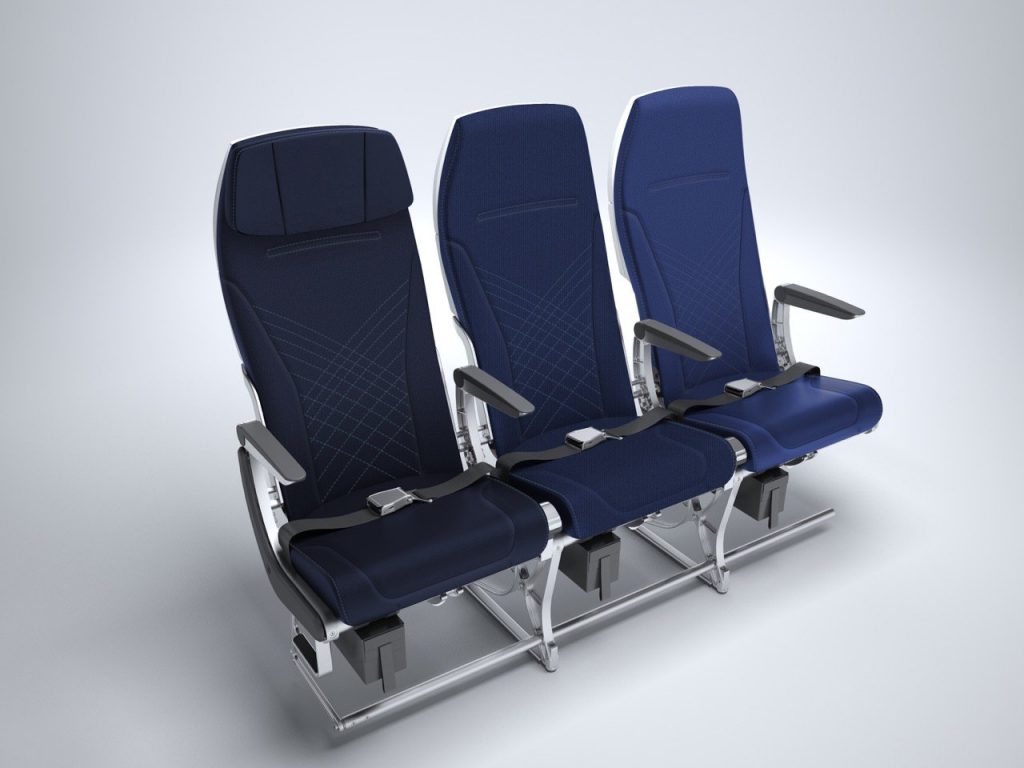
The majority of a flight is spent in a seat, so it’s no surprise that the seating manufacturing sector is set to grow. The impact of COVID-19 on flying will also result in some new innovations finding their way to market.

Research from Markets and Markets shows that the aircraft seating sector is projected to soar from $7 billion in 2019 to $12 billion by 2027. A focus on comfort and rising demand for premium economy class seats are the main driving forces for this growth.

A first class experience

Looking to take advantage of this growth are Aviointeriors. Their Mona Lisa first-class suite provides passengers with privacy, a full flat horizontal bed for superior sleeping comfort, a 21” IFE screen and a super-wide table to fulfil all entertainment and dining needs onboard.

The company also has its Columbus range of seating options, including economy class seats, the narrowbody Columbus 2 range and EASA Class 3 compliant crew rest. This is ideal for single-aisle, high-density layouts that retain full passenger capacity during non-crew-rest operations.

Avioninteriors has also released some concepts for post-COVID-19 seats. The ‘Janus’, named after the two-faced Roman god, features a reversed middle seat with curved plastic separating the passenger from the window and aisle.

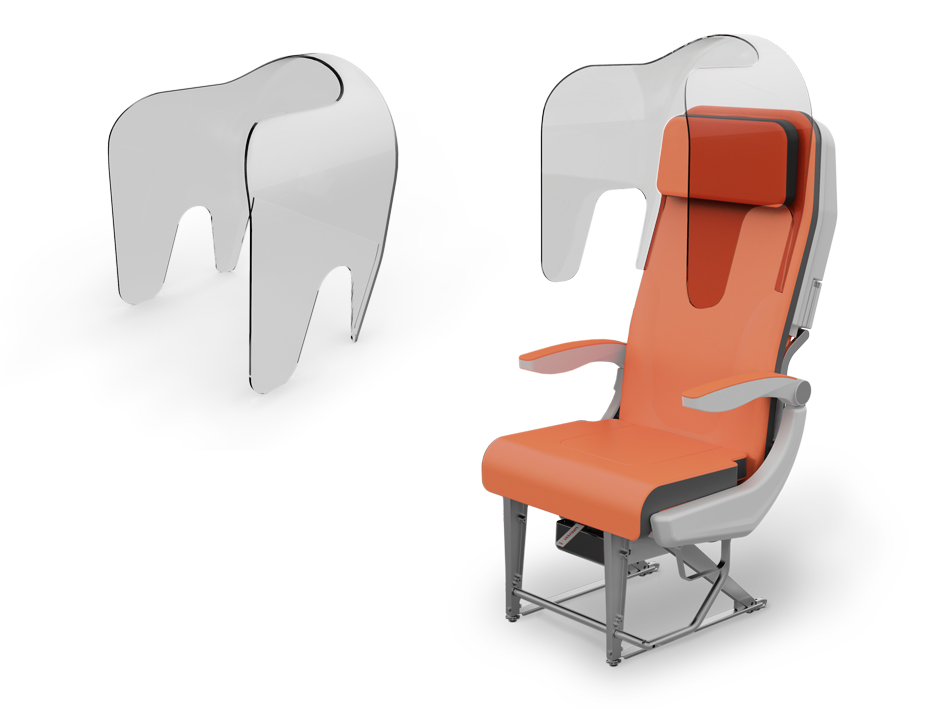
They also have come up with another offering that could fit existing seats. The ‘GLASSAFE’ would be a protective bubble that surrounds the passenger’s head on all sides. Avioninteriors believes this would be a quick way to offer social distancing to existing customers. We expect to see more concepts from other seating manufacturers soon.

The GLASSAFE is one possible solution to COVID-19 (Aviointeriors)

UK based manufacturer Acro Aircraft Seating has a wide range of seating options. Their Series 7 Premium Economy seat was developed to optimise the ‘space within a space’. The extra spatial design is aesthetically pleasing and functional. It incorporates personal storage consoles and an elegant single leaf table.

In addition to the Series 7, Acro has its next-generation Series 6 Economy seat. It is built around a fully composite seatback, offering 2” more room at knee level, allowing taller passengers to easily stretch out, even at 28” pitch. Spirit Airlines has implemented the Series 6 seat on some of its planes and has seen comfort scores for middle-seat passengers increase by 50%, according to Fox 32 News.

The ‘Series 6’ seat has seen passenger comfort scores improve (Acro)

Molon Labe Designs has also been busy updating its popular long-haul economy class ‘stagger-seat’ design. The new S3 “Side-Slip Seat” is the third version of the original S1 “Space Seat”.

The new S3 design doubles the aisle width during boarding by sliding the outside seat over the middle seat. This can reduce boarding time by up to 30%, saving ground cost, emissions and time.

A new dimension

Some pressure is also being applied in the USA to Congress by advocacy group FlyersRights.org for the FAA to set minimum seat dimensions. As reported in Forbes, Senator Chuck Schumer has stated that seat size is the number one complaint he hears from passengers.

Pitch recently unveiled its new “Q Ultra-Slim” concept. They state it is the world’s thinnest aircraft seat and was developed alongside design consultancy Design Q. It will also use a range of sustainable bio-resin composite materials to bring the seat weight down to only 7kg.

Another lightweight option comes from Haeco. Their new Vector Light product is set for release in Q4 2020. So far they’ve only released a teaser video of the new design on Twitter that looks to reduce the seat profile and increase legroom.

The material world

It’s not just seat design that informs comfort, but also the materials that cover them. Aircraft Cabin Modification GmbH specialise in refurbishment with a range of specialist seat covers, laminated leather, fabrics and synthetics all available.

AERISTO is also continuing to improve its high-quality leather and sheepskin covers that are FAA approved. Its lightweight Ventimesh solution allows airflow and is available in 2 – 20mm thickness for all seating options.

Driving class and comfort

Aircraft seating is continually evolving and it is a clear way for airlines to improve customer satisfaction. The wide range provides airlines with a way to differentiate and attract customers to its services. Once global flight begins to pick up again in late 2020 and early 2021, we’re sure to see more innovation in this area over the next few years.

Sign up for the latest exhibition updates and industry insights here

Interview with: Mónica Fischer, Recaro Aircraft Seating

Interview with: Mónica Fischer, Recaro Aircraft Seating

The Aircraft Interiors Expo (AIX) team sat down with Mónica Fischer, Director of Global marketing and Commucations at Recaro Aircraft Seating, as part of our Women in the Aviation series.

This series of interviews aims to shine a spotlight on notable women in the industry and the diverse career opportunities in the sector.

Achieving her dream to work in aviation, Mónica Fischer joined RECARO Aircraft Seating two years ago as Director of Global Marketing and Communications.

Here, she reflects on how her determination, passion and “listen-learn-combine-act” approach has been fundamental to her success and encourages fellow female professionals to grab every opportunity with both hands.

Mónica, how long have you worked in the aviation industry?

“For two years and it’s been two exciting years. From the very first second I started with Recaro I felt connected and was highly fascinated by the culture, entrepreneurship, DNA, products, the company’s success story and the people. From the very first second, it felt like the Recaro bug got to me and since then hasn’t left me at all.”

How did you get into the industry?

“It had always been a dream to work in the aviation industry. Two years ago I thought it’s now or never. That’s when I wrote an application letter to Dr. Mark Hiller, CEO & Shareholder of RECARO. I received an answer right away and went through the whole interview process – the smoothest and most professional I’ve ever experienced. Everything clicked from the very first second and there was no way I could resist this wonderful job-offer.”

What is it about working in the aviation industry that appeals to you?

“It’s the excitement to work for an industry that continuously takes you around the globe several times a day. Every day brings new opportunities and sometimes challenges. The aviation industry ensures you’re always in motion and challenges you to come up with smart marketing-communication concepts that substantiate the company’s reputation, helping to further build on brand awareness.”

As a woman, how do you find working in such a male-dominated industry?

“Actually, I enjoy it very much. All I have encountered is a great mutual respect level. And yes, sometimes discussions might become a little bit more heated, but that’s good because it’s all about passion about what each of us believes in.

“We need to further build on diversity in all aspects of the industry.”

Mónica Fischer

At the end of the day, it’s about a fair share of ‘give and take’ and coming up with the best solution. At Recaro, we have a wonderfully rich culture of values, team spirit, responsibility, integrity, excellence, entrepreneurship and enthusiasm – and this is embodied by everybody working at the company.”

Have you encountered any gender discrimination in your career?

“Fortunately, I have not. Yet I know that women I have met throughout my career have experienced issues. It’s so damn tough to be brave and have the courage to report incidents because we fear the consequences. We tend to accept the responsibility on our own shoulders. Yet, I am a strong believer in justice finding its way, therefore I’d like to encourage all women out there not to shy away, stand up for your rights.”

As a female senior leader, why do you think it’s important for companies to address the gender gap?

It’s all about having a good balance – that’s a rule that applies to life. What happens if you eat too many gummy-bears? Your body goes off balance, the same might apply to your wellbeing. This analogy also applies to finding the best balance within teams – genders do benefit from each other. Therefore in order for having a healthy and successful team structure, it’s so relevant to address and create awareness for the gender gap.

“I believe women could learn from men in business a lot and vice versa.”

Mónica Fischer

One year ago I had a meeting with my boss, Mark Hiller. I told him that I’d like to initiate a women forum within the company, the purpose being to empower women on their career path and to give them a stronger voice within the company.

Mark immediately bought into the idea and is a big promoter of women at RECARO. That’s how the initiative women4women was founded.”

What characteristics do you believe women need to survive in the aviation industry?

“Women do have one of the most wonderful assets there can be – their team-orientation and their simply wonderful capability of being an integrator. Paired with knowledge, experience, know-how, charisma and leadership skills, this becomes pretty unbeatable.”

In your opinion, what is the biggest obstacle to women succeeding in the workplace?

“Generally speaking, I’d say their fear/doubts about not being knowledgeable enough to meet the requirements of the industry. I believe women could learn from men in business a lot and vice versa. In this specific context I’d say allow yourself to be daring and start reaching for opportunities, be certain and don’t wait until being “asked” by your superiors/peers – when you know what you want, all you have to do is “go for it”.”

What do you believe is the biggest challenge facing the aviation industry?

“In a male-dominated working environment? We need to further build on diversity in all aspects of the industry. It’s why we launched the women4women initiative. We also need to address sustainability and introduce programs to build on employees training and education. Having attractive career programs for capable ambitious people is key.

“It had always been a dream to work in the aviation industry.”

Mónica Fischer

At RECARO, we have the global FLY program. It is a one-year program that supports team members from across the world, helping them to take the next step in their career into a leadership position.”

What do you believe has been the biggest development in air travel over the past 25 years?

“Making flying affordable for everybody.”

If you could change one thing in the aviation industry, what would it be?

“Being more open toward innovation.”

Who has been your biggest advocate/mentor in the workplace and why?

“Always my bosses, because of mainly two reasons. The first, new ideas to support and build on the company’s reputation and second, because I offered them peace of mind through my approach to business.”

About Mónica Fischer

Mónica Fischer has more than 30 years’ experience in marketing and communications. She joined RECARO Aircraft Seating, a global supplier of premium aircraft seats for airlines and OEMs, in 2018 as Director of Global Marketing and Communications.

She leads the team responsible for all marketing aspects at RECARO, helping to facilitate and improve the company’s relationship with its key stakeholders. Prior to joining RECARO, Mónica held the position as Managing Director of AMCommunications, a subsidiary of DSV Gruppe for more than eight years, following more than nine years as Joint Managing Director of McCann Erickson, working across its Frankfurt, Berlin and Zurich offices.


Sign up to visit AIX here.


Interview with: Lindsey Sander, Envoy Aerospace LLC

Interview with: Lindsey Sander, Envoy Aerospace LLC

The Aircraft Interiors Expo (AIX) team sat down with Lindsey Sander, Certification Engineer at Envoy Aerospace LLC., as part of our Women in the Aviation series.

This series of interviews aims to shine a spotlight on notable women in the industry and the diverse career opportunities in the sector.

She believes that it’s vital for the industry to attract and nurture the next generation of aviation professionals if it’s to combat a ‘knowledge drain’.

Read on to find out how she carved her own career path and her views on being a woman in the business.

Lindsey, How long have you worked in the aviation industry?

“I have actively worked in the aviation industry for almost three years as a certification engineer; however, both my parents worked in aviation, so I feel as though I’ve been in the industry my whole life.”

How did you get into the industry?

I grew up with two parents working in aviation, one of which is an FAA designee. Often my parents would come home from work and discuss their workdays with each other. As a kid, I’ll admit that those conversations were rather boring. However, once I learned to speak the aviation language, I became fascinated with their work.

Going into college, I knew that I ultimately wanted to pursue a career in the aviation industry, so I majored in electrical engineering and focused my research on Unmanned Aerial Vehicles (UAVs) (aka drones).

“The passenger experience has been developed more than any other aspect of air travel in the last 25 years.”

Lindsey Sander

I got my first real taste of the aviation industry during the summer of my senior year in college when I interned with the engineering department of an FAA Part 145 Repair Station (West Star Aviation, East Alton, IL). That internship confirmed my passion for the industry. In 2017, I started my current job with Envoy Aerospace (FAA STC ODA) as a Certification Engineer and I have been working in the business for nearly 3 years now.”

As a woman, how do you find working in such a male-dominated industry?

I am fortunate that the colleagues I work with daily do not focus on gender, but rather on merit. This is mostly true even for the new people I meet. However, every now and then, when I first meet a new face, I perceive a hint of scepticism in my capabilities, maybe because I am a woman or maybe because I am young; however, that is typically short-lived once I’m able to show my competency.”

Have you encountered any gender discrimination in your career?

“As far as I can tell, I have not encountered “gender” discrimination. There have been some encounters where I detected a hint of scepticism in my abilities, but I would guess that is related to my age and perceived inexperience rather than being a woman. To me, these encounters are opportunities to show my competency.”

As a female senior leader, why do you think it’s important for companies to address the gender gap?

“I am fortunate enough not to have been exposed to a gender gap, however, I do acknowledge that such a gap exists. To remedy this, I think it is important for companies to focus on hiring and promoting qualified individuals. If technical competency becomes the hiring and promoting focus, then the gender gap should take care of itself.”

What do you believe has been the key to your success?

“I believe the keys to my success are twofold: First, listening to and interacting with the customer, and second my work ethic to grow my technical skills in the ever-changing aviation world. I am passionate about my job and truly enjoy being on the front line with my customers.

“I feel as though the aviation community has come a long way in the last 20 years.”

Lindsey Sander

And by continuously enhancing my technical competency, I am not only able to provide my customers with the most current knowledge, but also extinguish any doubt regarding my technical incompetency because I am a woman.”

What characteristics do you believe women need to survive in the aviation industry?

“There are two characteristics I find to be most valuable: a strong work ethic and solid communication skills. I often surprise new male co-workers when I’m able to intelligently discuss the technical aspects of the project.

Likewise, they don’t expect me to crawl into the equipment racks and wheel wells, but I do because it’s part of my job. A strong work ethic and good communication skills will go a long way in proving technical competency.”

In your opinion, what is the biggest obstacle to women succeeding in the workplace?

“As a young engineer, I have been extremely fortunate in that I’ve not faced many obstacles in the workplace related to gender bias. I’ve certainly heard a few stories from my more seasoned female colleagues about their own experiences when they first entered the industry.

“Getting the younger generation involved and trained is a key challenge for the aviation industry.”

Lindsey Sander

However, I feel as though the aviation community has come a long way in the last 20 years. It seems that there is very little gender bias anymore which makes me proud to be involved in the sector.”

What would you say has been your career highlight to date?

I led an STC project from cradle to grave that installed an ADS-B Out system on a fleet of Boeing 737-400 Series aircraft. I wore many hats on the project, from creating some of the engineering drawings to managing the FAA certification effort, to providing hands-on engineering support for the prototype installation (including on-aircraft testing and troubleshooting), to finally coordinating the STC issuance. It was a long and arduous project involving overseas travel, but it was completed successfully, ahead of schedule and our customer was very happy.”

What’s the best piece of advice you’ve ever been given?

“My favourite school teacher once told me, “Happiness is a choice. Choose to be happy.” The aviation industry can be very demanding and stressful at times, especially during AOG (aircraft on ground) situations. Most of the time I enjoy the challenge of that intense pressure; however, occasionally it can be overwhelming. During those moments, I often repeat that quote over and over in my head to keep myself sane and continue to enjoy the rush.”

What do you believe is the biggest challenge facing the aviation industry?

“Getting the younger generation involved and trained is a key challenge for the aviation industry. A large portion of this industry’s workforce is in the back half of their careers looking towards retirement. The industry is facing a significant knowledge drain if the next generation doesn’t step up.

It is important to get ahead of this knowledge drain and recruit motivated young individuals now, so they have as much time as possible to train-up. One day, these young individuals will shape the future of the aviation industry.”

What do you believe has been the biggest development in air travel over the past 25 years?

“In my opinion, the passenger experience has been developed more than any other aspect of air travel in the last 25 years. In order to stay competitive, operators and lessors have focused their attention on modifying aircraft to provide the best possible passenger experience.

These types of modifications include cabin re-configurations, installation of InFlight Entertainment (IFE) systems including Wi-Fi connectivity, In-Seat Power Supply (ISPS) installations, Transmitting Personal Electronic Devices (TPED) testing, etc. With new technologies coming to the market daily, I don’t see this focus on the passenger experience slowing down any time soon.”

If you could change one thing in the aviation industry, what would it be?

“I would encourage OAMs and STC providers to work together to educate the aviation community on the value of the STC. OAMs have the perception of being the highest quality, but most expensive. STCs are often viewed at the other end of the spectrum.

“Once I learned to speak the aviation language, I became fascinated.”

Lindsey Sander

However, if developed correctly by STC providers committed to a high level of quality, the STC can be a viable alternative to an OAM Service Bulletin (SB). STCs will never be able to completely replace OAM SBs, but there is a time and place for both approval mechanisms.”

Who has been your biggest advocate/mentor in the workplace and why?

“The three Envoy Aerospace executive partners (Adrian Honer, Marilyn Feigl and Mark Haycock) have collectively been my biggest advocates and mentors in the workplace. Adrian, Marilyn and Mark are all FAA DERs and FAA ODA Engineering Unit Members (UMs). Mark is also an FAA DAR, Conformity UM and Flight Test Pilot UM. They are walking encyclopaedias on the aviation industry.

Beyond their technical ability, they truly care about their employees and customers on a personal level. They take time out of their busy schedules not only to answer your immediate questions but the next four follow-up questions too. They expect excellence and will help you achieve it. I feel very fortunate to have them as my advocates/mentors.”

About Lindsey Sander

Lindsey started her aviation career as an intern with West Star Aviation in the summer of 2014 where she assisted in the development of both design and substantiation data for several STC projects. After graduating with her BS in Electrical Engineering from the University of Tennessee-Martin, Lindsey began her career in the nuclear industry with Atkins Nuclear Solutions.

While at Atkins, Lindsey gained valuable industry experience working simultaneously as the Lead Electrical Engineer and Project Manager. After two years in the nuclear industry, she decided to follow her passion and transfer back into the aviation industry; specifically, aircraft certification. She started working with Envoy Aerospace in June 2017 as a Certification Engineer.


Sign up to visit AIX here.


Interview with: Karyn McAlphin, Sekisui Kydex

Interview with: Karyn McAlphin, Sekisui Kydex

The Aircraft Interiors Expo (AIX) team sat down with Karyn McAlphin, Design Strategist at SEKISUI KYDEX, as part of our Women in the Aviation series.

This series of interviews aims to shine a spotlight on notable women in the industry and the diverse career opportunities in the sector.

With more than 30 years’ experience in the aviation sector and strong family ties to the sector, Karyn brings passion and a unique understanding of the passenger experience to her role. Read on to find out how she carved her own career path and her views on being a woman in the business.

Karyn, how long have you worked in the aviation industry?

“I’ve worked in the aviation industry since April 1989, when I joined USAir as Manager – Advertising & Sales Promotion.”

How did you get into the industry?

“It was a total fluke but looking back I can see clear ties to how I ended up and stayed in aviation.

My father was a pilot in WWII and later had his own Mooney, the fastest single-engine aircraft at the time, so I grew up with a love for flying as well as “the need for speed”. He owned his own contracting business and the plane was ostensibly for checking job sites, but I always suspected it was more for fun than anything else.

I can remember entire conversations between my parents regarding how he should paint his plane. Fast forward 25 years to my overseeing the new US Airways aircraft livery getting painted on our first A330-300 at Airbus in Toulouse! My dad also liked to take things apart and put them back together, so another of his hobbies was rebuilding wrecked sports cars. I honestly think being exposed to this early on helped me relate to aviation engineers and mechanics later in my career.

It’s imperative for companies to encourage young women to go into aviation engineering.”

Karyn McAlphin

My father died of a heart attack when I was a senior in high school, so I scrapped my plans to study fashion illustration at Syracuse University to stay closer to my mom. Instead, I went to UCLA and got my bachelor’s degree in Painting/Sculpture/Graphic Arts. At that time, art majors at UCLA had to choose between studying Design or Fine Arts, so I chose the latter because I was good at drawing.

After graduation, I pursued a second BA in Photographic Illustration from Brooks Institute of Photography and ended up getting a job processing film, making title slides and driving a delivery truck before I progressed to shooting and producing multi-image presentations for major clients.

I eventually moved to Washington DC after interviewing for an opening at USAir. They needed someone in the Advertising & Sales Promotion department with a production background to oversee A/V for their marketing conferences and other needs. Although they really liked my qualifications, they needed to post the job internally at the airline, as well as with the DOT, before doing so externally.

The position sounded like my dream job – tying photography, A/V and flying all together, so I literally spent the next three months learning everything I could about USAir and the aviation industry. Later, when I got the job with the airline, I took great pleasure in thinking how much my dad would have loved hearing about everything I did for a living.”

What is it about working in the aviation industry that appeals to you?

“When I started in the marketing department, I was responsible for USAir’s multi-media presentations, among other things. I spent a fair amount of time setting up air-to-air shoots and directing photographers on the ground.

There’s nothing more exciting than pulling zero-Gs in a completely empty plane or running around on the ramp smelling jet fuel while trying to get the required shots as jets and ground service equipment move all around you. What can I say? I’m an airline junkie — once it gets in your blood, it’s impossible to get out!

One of the things I liked best about working for an airline was that every day was different. There was always something new and exciting to work on, and the tangible aspects of my job were really rewarding. My mother and I would fly stand-by together frequently, and I revelled in pointing out all the things on the plane that I had worked on.

Later, while overseeing product development for US Airways, I realised how much I enjoyed “thinking like the customer” and creating solutions to improve the overall experience.”

As a woman, how do you find working in such a male-dominated industry?

“For me, it was never really an issue, because I worked in the marketing department for 25 years. I used to joke that the advertising & promotions department was the “pink ghetto” of the airline industry because so many women worked there.

However, when I began working on aircraft interiors in 1996, I dealt primarily with male engineering teams – both at the airline and with our seat suppliers. Initially, my Tech Ops colleagues thought many of my ideas were crazy, but they came to respect me as they began to understand why certain things were really important for our customers.

Naturally, there were times when I needed to be pragmatic about what would work for our maintenance team, and being collaborative certainly helped gain my colleagues’ support. I really relied upon the engineering team and could not have achieved what I did without their help.”

As a female senior leader, why do you think it’s important for companies to address the gender gap?

“Although there are many females in purchasing supporting Tech Ops teams, there are still relatively few female engineers. I believe it’s imperative for companies to encourage young women to go into aviation engineering for several reasons.

Research has shown that women approach things differently and a more collaborative and productive method might prove useful. In addition, with more women travelling for business, it’s extremely valuable to bring a better understanding of 50% of the flying population to the table. I can’t begin to list how many times I’ve experienced something somewhere that didn’t work for me and thought “this must have been designed by a man!” At AIX last year, I met a young female engineer from one of the major airframe manufacturers who was absolutely brimming with ideas. It was truly exciting to talk to her and realise that she was the future of aviation.”

What do you believe has been the key to your success?

“I think the key to my success has been my ability to understand the innate wants and needs of our customers and convey them to my colleagues in such a way that they buy in to the importance of certain products and services. The teams I’ve participated in and led have required a great deal of collaboration and diplomacy to come up with solutions that ultimately benefit everyone.”

What characteristics do you believe women need to survive in the aviation industry?

“Because aviation is such a male-dominated industry, I think – unfortunately – women still must work harder to be taken seriously. I’m a firm believer in paying your dues, based on my own experiences. Recent research indicates that millennials will not be able to achieve the same quality of life enjoyed by their parents which is distressing, so having a good work ethic and passion for what you do are important characteristics to sustain you through challenging times.

Developing a thick skin and harnessing the ability to tenaciously – but professionally – pursue what you know is right, even when the going gets tough, is also extremely valuable.”

What would you say has been your career highlight to date?

“There are several that come to mind, including overseeing the entire corporate rebranding of USAir to US Airways; introducing the first buy onboard programme in the domestic U.S. and leading a complete uniform redesign following the merger between America West and US Airways.

“There’s nothing more exciting than pulling zero-Gs in a completely empty plane.”

Karyn McAlphin

For the sake of this interview, however, I’ll focus on one: being the launch customer for the reverse herringbone Cirrus seat, which was declared an industry game-changer by the press upon its introduction.”

What do you believe is the biggest challenge facing the aviation industry?

“With the increased attention on climate change, I think it’s imperative that the industry addresses CO2 emissions. Creating an engine capable of running on biofuel to lower emissions is a worthy cause. Boom, the new supersonic aircraft manufacturer, is exploring biofuels and how to make the world dramatically more accessible.

“I grew up with a love for flying.”

Karyn McAlphin

It will be interesting to see if we can eventually lower the carbon footprint by getting to the destination faster, using more earthfriendly fuel.”

What do you believe has been the biggest development in air travel over the past 25 years?

“I think the biggest development in air travel over the past 25 years has been the evolution of lie-flat seats. Passengers can now arrive at their destination feeling more refreshed and relaxed than ever before. I find it fascinating that some carriers are now even putting lie-flat seats on narrow-body, transcon aircraft.”

If you could change one thing in the aviation industry, what would it be?

“I would reverse 9-11. That attack drastically changed the entire industry and my life personally. US Airways was headquartered at Washington National Airport, which was shut down for three months afterwards. Fighter planes patrolled the air space and when flights resumed, air marshals flew in First Class on flights in and out of the U.S. capital. Passengers were not allowed out of their seats 30 minutes prior to landing and TSA officials enforced constantly changing rules to foil would-be terrorists.

US Airways was not able to sustain business under such dire conditions and had to declare bankruptcy. We worked hard to emerge from bankruptcy but came out too soon and went back under a second time.

Ultimately, all of the major U.S. carriers declared bankruptcy because they simply could not continue to make enough money. After two failed attempts to merge with United Airlines, US Airways merged with America West which billed itself as a low cost carrier.

With vastly different corporate cultures, the new company had plenty of issues to address, but succeeded based on its unique new business model, ultimately merging again to create the new American Airlines which had just emerged from bankruptcy.

Just about everyone who worked in the industry following 9/11 had some horror story to tell, and at the airline we quickly learned who our friends were. A dynamic, vital industry was crippled and brought to its knees, forever affecting the way business passengers flew.”

Who has been your biggest advocate/mentor in the workplace and why?

“When US Airways and America West merged, I elected to relocate from the Washington, DC area to Phoenix, AZ, where America West was based. I loved my job and didn’t want to leave the airline. However, the America West management team was calling the shots and my previous director was skilfully forced out by my new director.

He was relatively young with just a few years of airline experience, but it was clear that he had the backing of my new VP. I made a conscious decision to support him by sharing everything I knew about the way US Airways had operated.

He appreciated my efforts to help make him successful in the organisation and over time we became really good friends. Thanks to his support, I worked on many of my most exciting projects while reporting to him. He grew into his role over the years and had some of the best people management skills of anyone I’ve ever worked with.”

About Karyn McAlphin

Karyn has over 18 years of experience in aircraft interior product development and is an accomplished brand management strategist with extensive marketing experience in the airline industry, specifically in cabin design and branding for new aircraft specifications and retrofits. She holds two Bachelor of Arts degrees from UCLA in Fine Arts and from Brooks Institute in Photographic Illustration.


Sign up to visit AIX here. 


Interview with: Geraldine Lundy, Director, Accessible Travel Consultancy

Interview with: Geraldine Lundy, Director, Accessible Travel Consultancy

The Aircraft Interiors Expo (AIX) team sat down with Geraldine Lundy, Director of Accessible Travel Consultancy and former Passenger Accessibility Manager at Virgin Atlantic, as part of our Women in the Aviation series.

This series of interviews aims to shine a spotlight on notable women in the industry and the diverse career opportunities in the sector.

Geraldine, how long have you worked in the aviation industry?

“I’ve worked in the aviation industry for just over twenty-one years.”

How did you get into the industry?

“My background is in chemistry and when I returned to work as a newly single mother, I wanted a brief change from the fume cupboard. I thought a couple of years learning new skills would be interesting before I returned to science.”

What is it about working in the aviation industry that appeals to you?

“The fact that those two years morphed into more than two decades demonstrates how much I love this industry. The most exciting aspects for me are that things are continually evolving and developing, particularly in the area I’m passionate about – accessibility.

When I first started at Virgin, the word ‘accessibility’ was hardly used and the industry used to talk about disability and ‘handicapped’ lavatories or seats. Thankfully things have evolved since those days and now accessibility is more firmly embedded in the industry and in people’s attitudes.

“The language and attitude in the workplace have improved immensely over the decades.”

Geraldine Lundy

For me, I hugely relish the challenge of producing the best possible outcome for all stakeholders concerned – be they our passengers, employees or the particular company we work for, as well as airports, third party providers, aircraft manufacturers, seat manufacturers, industry bodies and regulators. Sometimes it’s not possible to achieve everything but there is great satisfaction in doing the best you can and striking a suitable compromise.

Also, it’s important to note that life in aviation is never boring. You may have a game plan for your working day or week but it’s always interesting to review what actually happened. Having to adapt on a daily and sometimes hourly basis can be exhausting but makes for an interesting working environment.”

As a woman, how do you find working in such a male-dominated industry?

“I enjoy it and it has changed dramatically over the years, although there are still aspects that could be improved. I love the mix of ideas and opinions you get from working with colleagues of all genders and gender identifications.”

Have you encountered any gender discrimination in your career?

“Yes, at the start of my career I discovered I was doing a comparable job to a male colleague for considerably less remuneration. I took it further internally but wasn’t listened to. I think the people involved initially thought that if they stalled, I wouldn’t pursue the issue.

However, when I feel I am in the right about something I do like to see things through to the end, so I gathered all the supporting evidence and escalated things through the company. Fortunately, it came to the attention of a senior female manager who resolved the situation before I had to take things externally. I know this situation wouldn’t happen today.

Thankfully, the language and attitude in the workplace have improved immensely over the decades. I am not aware now of any of the derogatory comments I and my female colleagues used to hear many years ago.”

As a female senior leader, why do you think it’s important for companies to address the gender gap?

“I believe it is vital for any company or organisation to be truly inclusive. It’s the right thing to do within society but also the right thing to do for your business. If you are truly inclusive (by which I mean attempting to address all gaps – age, gender and gender identity, ethnicity, employees with differing accessibility requirements etc in all areas – pay, attitude, career opportunities, learning opportunities, etc/) then you’ll have a happier workforce with a wider skill set.

If you have more engaged employees your business will tend to thrive (assuming your business model isn’t flawed!).”

What do you believe has been the key to your success?

“I like to make a positive impact and strive to do a good job whatever I take on. I also like to see things through to completion. If I encounter an obstacle, I like to explore whether there is another way to overcome it. I’ll also try to be as polite as possible whatever I’m doing.”

What characteristics do you believe women need to survive in the aviation industry?

“I hope it’s not a case of survival these days. I hope, instead, it’s more a case of opportunities to achieve and flourish. Also, I’m not sure it’s any different to most other industries these days – work hard, be prepared to be flexible and be honest.”

In your opinion, what is the biggest obstacle to women succeeding in the workplace?

“I think for most people, whatever gender or background, the biggest obstacle will be themselves. Firstly, do they know themselves well enough to be in the right job for them for the right reasons? Also, what is their definition of success – is it money, level of management, number of direct reports or job satisfaction, for example? And then, do they have the belief in themselves to pursue whatever they want to do?”

What would you say has been your career highlight to date?

“I’ve been lucky enough to have so many it’s hard to choose! On a customer level, I love the fact that we’ve enabled so many people to travel when others have said no. This has opened the world up for some, and for others, it has given them treasured memories to cherish when their loved ones are no longer alive.

On a company level, to have been chosen to fly the Invictus team to Florida was a great accolade for everyone who works at Virgin Atlantic.

I also recently acted as Master of Ceremonies at the inaugural IATA Global Accessibility Symposium, which was a wonderful personal highlight. It was a great privilege to have been asked to do this and fantastic to see how far the concept of accessible aviation has come.

I feel so proud to have been one of the group of people who have been raising awareness of this around the world so much so that our industry body has now got this firmly on its agenda.”

What’s the best piece of advice you’ve ever been given?

“The best indicator of someone’s future behaviour is their past behaviour.”

What advice would you give to female professionals interested in a career in aviation?

“Just go for it. There is such a huge variety of roles and opportunities out there for the taking. Most companies encourage mobility and you will have the ability to develop your career and find the role that you enjoy most. Oh and remember, airlines are 24/7 365 days a year – you will work hard, so ensure you have a toolkit of resilient support.”

What do you believe is the biggest challenge facing the aviation industry?

“With so many agencies declaring a climate emergency and many public demonstrations against climate change, there is a lot of negative press concerning aviation’s contribution to greenhouse emissions. Many people are choosing not to fly and some governments may consider restricting air travel growth or increasing aviation taxes. Some countries have allegedly experienced a decrease in passenger numbers. It will be interesting to see how this situation develops. At the moment, I’m uncertain of the impact it will have.

Meanwhile, I believe there are many positive steps the industry can take in line with IATA’s policy suggestions for climate change. IATA has outlined a set of ambitious targets to mitigate CO2 emissions from air transport, including an average improvement in fuel efficiency of 1.5% per year to 2020; a cap on net aviation CO2 emissions from 2020; and a reduction in net aviation emissions of 50% b 2050, relative to 2005 levels.

“Life in aviation is never boring.”

Geraldine Lundy

This multi-faceted approach is underpinned by a four-pillar strategy, demonstrating IATA’s commitment to be part of the solution. More information can be found here.

I also think it is important to get the positive messages out regarding what the industry contributes to the world – jobs, tourism, economic growth, medical treatment, time-critical transportation (organs), world trade to name a few.

Broadening this out, I think the industry could do more to champion the benefits it brings and what initiatives they are working on at every level – inclusion, accessibility, sustainability, responsibility. This could mitigate some of the negative attention.”

What do you believe has been the biggest development in air travel over the past 25 years?

“I’m biased but today, more and more people with disabilities have access to air travel in a safer and more comfortable way than they had 25 years ago. This has been facilitated by improvements within the industry and the raft of accessibility legislation that has been introduced in the past 25 years protecting the rights of people with disabilities.”

Who has been your biggest advocate/mentor in the workplace and why?

“A lady called Gilly Golesworthy. Gilly is an independent advisor to the aviation industry focusing on accessibility. She has taught me (and others) over the years to move away from scheduling/managing disabled passengers to assisting/facilitating customers with disabilities. It’s a subtle mind shift which delivers a huge impact in attitude and approaches to what we need to do in this area.”

About Geraldine Lundy

Geraldine Lundy has accumulated more than 20 years experience as part of the Medical Services team at Virgin Atlantic; seven of which she has had the privilege to be the airline’s Passenger Accessibility Manager – championing universal design throughout the passenger experience.

Her role at Virgin had two key foci – to enable a customer with a disability to have a safe and comfortable flight and to ensure that the airline is compliant with all disability-related aviation regulations/legislation.

Passionate about accessibility, in August 2019, she launched the Accessible Travel Consultancy, to provide expert advice to companies and people with disabilities to facilitate and enhance accessible travel across the aviation industry and beyond. Geraldine continues to work with Virgin Atlantic in a consultative role and sits on a variety of industry bodies working to improve access to aviation.


Sign up to visit AIX here. 


Interview with: Jutta Abulawi, Hamburg University of Applied Sciences

Interview with: Jutta Abulawi, Hamburg University of Applied Sciences

The Aircraft Interiors Expo (AIX) team sat down with Jutta Abulawi, Professor for Systems Engineering and CAD at the Hamburg University of Applied Sciences, as part of our  Women in the Aviation series.

This series of interviews aims to shine a spotlight on notable women in the industry and the diverse career opportunities in the sector.

For AIX’s Women in Aviation series, we sat down with Jutta Abulaw,  Professor for Systems Engineering and CAD at the Hamburg University of Applied Sciences. We spoke about she has encountered and overcome prejudice throughout her career. And she says that her passion, resilience, confidence and empathy have been key to her success.

Here she tells us how she’s done it.

Jutta, How long have you worked in the aviation industry?

“My first job after graduation was in the aviation industry, back in 1988. I started my career with Airbus Operations – then still called Messerschmidt Bölkow Blohm. At that time the wide-body, commercial aircraft family A330/A340 were being developed. I was part of a small team based in Hamburg, and we prepared the documents describing the new aircraft for potential customers. I was responsible for four ATA chapters, so I had a good overview of the aircraft as a whole.

I only worked there for nine months because I soon realised that it would be more interesting to conceive and design technical solutions rather than gathering all the information from various departments and preparing documentation. At that time there were no suitable jobs available at Airbus, so I left to work as a mechatronics system designer with a small company in the special machine industry.

I was sorry to leave the aviation industry because aircraft are fascinating, complex systems with many design constraints, but I was much better paid and had a more interesting job with much more responsibility.

“Aviation has always attracted women because most jobs need brains rather than muscle.”

Jutta Abulawi

After 12 years with the machine tool company, I returned to academia in 2001 to work at the University of Applied Sciences Hamburg – in the Department of Automotive and Aeronautical Engineering. To begin with, I was more involved in projects in automotive engineering and wrote my PhD thesis in cooperation with automotive companies.

When I qualified as a junior professor, I started to teach in both automotive engineering and aeronautical engineering degree programmes. I had never given up my contacts at Airbus, so it was relatively easy for me to establish a good cooperation with the Cabin & Cargo Engineering Department at Airbus for my design classes.

Since I became a full professor in 2013, I have collaborated with Airbus and Lufthansa Technik and several engineering service providers on teaching and research projects. I enjoy these collaborations very much, particularly because they allow me to participate in interesting projects focused on solving challenges in aircraft design, manufacturing and maintenance.”

How did you get into the industry?

“I was fascinated by the complexity of large, commercial aircraft and the enormous number of people involved in their development. I was also keen to work in an international environment since I spoke English and French very well in addition to my mother tongue German.

“The civil aviation industry is working hard to close the gender gap and increase diversity.”

Jutta Abulawi

My decision to become an engineer and to work in the aviation industry was influenced by my father who himself was an electrical engineer. As he worked as a consultant for safety at work in several industries including aviation, he encouraged me to study engineering.”

What is it about working in the aviation industry that appeals to you?

“It is the precision and safety-oriented mindset of everybody involved and the excitement of the complexity of large aircraft and their life-cycle processes.”

As a woman, how do you find working in such a male-dominated industry?

It was very hard back in the last century. Now it is still not easy, but much better. In the 1980s it was difficult for young women in engineering to find jobs with a lot of responsibility because there were still many prejudices against women in aeronautical engineering. The industry was dominated by male leaders, many of whom were very conservative and didn’t trust women to be able to master technical challenges or solve complex problems.

Fortunately, the situation has changed considerably, and most companies in the aeronautical industry are actively seeking to increase the number of women in engineering because they recognise that diversity in teams is needed to address the challenges of complex, global engineering projects.

However, the majority of engineers are still male and probably will always be. Additionally, many women have a different approach to solving engineering problems as they want to understand designs and systems before they get their hands on them or try them out.

This is often misunderstood as a kind of hesitation or reluctance, particularly when these women compete with males who are happy to take risks and prefer to learn through experience rather than analysis.

(Of course, not all male engineers are like this and there are women who are happy to try things first before analysing/understanding them.)

As children, boys tend to receive more toys which support this investigative, experimental approach to understanding technical subjects. Girls are more often encouraged to read and create beautiful paintings/sculptures, make music, get involved in roleplay or theatre, rather than building technical structures or playing with technical gadgets such as model railways, robots or remote-control cars. How children are raised is reflected in the percentages of male and female first-year students enrolling in STEM.

Programs to encourage girls to pursue a career in the aviation industry have been very successful. For instance, Girls Day, or the many initiatives taken by my university in cooperation with Airbus and Lufthansa Technik.”

Have you encountered any gender discrimination in your career?

“Oh, yes! When I tried to move from the documentation department to the engineering department at Airbus, I found that male graduates who had studied with me, but taken longer to finally graduate, were offered jobs in engineering whereas I was asked why I was not satisfied with a job in documentation which was more “suitable for a girl”.

When my children were small, some of my colleagues could not understand why I did not want to be a housewife. Fortunately, my boss and the CEO at that time had a different mindset and were happy for me to work in the design team.

Later, when I was working in academia and had started my PhD, a department head actually dared to ask me: “What the hell do you, as a woman, want to get a PhD for?” However, my university has a good culture and a policy to encourage women to seek a career in higher education and apply for faculty positions.”

As a female senior leader, why do you think it’s important for companies to address the gender gap?

“Many women have different competencies and preferences. Many of them are complementary to typical male strengths and weaknesses. The right mixture is ideal.

I think that the civil aviation industry is working hard to close the gender gap and increase diversity in teams and is definitely doing a much better job than the automotive industry.

Aviation has always attracted women because most jobs need brains rather than muscle. Even in the very early days, women became pilots and were very successful. Yet it is still rare to find women in management positions. Both Airbus and Lufthansa Technik have good programs for empowering women in leadership.

I believe that it’s important for the industry to continually attract more women to decision-making positions – particularly in commercial aviation where the passenger experience is increasingly important.

Women should be offered more hands-on experience with technical systems and manufacturing processes. Opportunities for hands-on internships are very rare, there should be more positions and women should be particularly encouraged to gain shop floor experience.”

What do you believe has been the key to your success?

“Passion, resilience, confidence and empathy.”

In your opinion, what is the biggest obstacle to women succeeding in the workplace?

Prejudice: In my first job I was meeting with the chief designer at Airbus in Bremen to discuss the cockpit door design of the A330/A340. When I arrived at his office, he asked me if I wanted to be his secretary!

There were many situations when male bosses or colleagues would consider me unfit for certain technical tasks just because I was a woman – not because I lacked a certain qualification or experience. Fortunately, I always managed to find male supporters, who believed in my analytical and problem-solving skills, my perseverance and my solid technical knowledge.”

What would you say has been your career highlight to date?

“Being appointed full Professor of Systems Engineering in the Department of Automotive and Aeronautical Engineering at Hamburg University of Applied Sciences.”

What’s the best piece of advice you’ve ever been given?

“If you have to set priorities in life and decide between an available career path and private happiness, select the latter and then try to find new career opportunities compatible with private happiness/family life.”

“Most companies in the aeronautical industry are actively seeking to increase the number of women in engineering.”

Jutta Abulawi

What do you believe is the biggest challenge facing the aviation industry?

Environmental issues: Media focus is prompting people to think about the carbon footprint of how they travel, how aircraft noise affects communities and the pollution caused by non-recyclable waste. I believe future generations are more likely to be sensitive to environmental issues.”

About Jutta Abulawi

Jutta Abulawi is Professor of Systems Engineering and CAD in the Department of Automotive and Aeronautical Engineering at Hamburg University of Applied Sciences (HAW Hamburg).

She holds a PhD in mechanical engineering and has worked in the aeronautical and the machine tool industry for 12 years. Jutta teaches engineering design and systems engineering at undergraduate and graduate levels in a project based approach and organizes international excursions and team projects for students.

Her research focuses on the practical application of methodical design and systems engineering approaches, including the use of parametric, reusable CAD models, software-based design assistants for additive manufacturing and systematic sketching and graphical modelling methods. In addition, she is engaged in the scholarship of teaching and learning in higher education.


Sign up to visit Aircraft Interiors Expo here.