

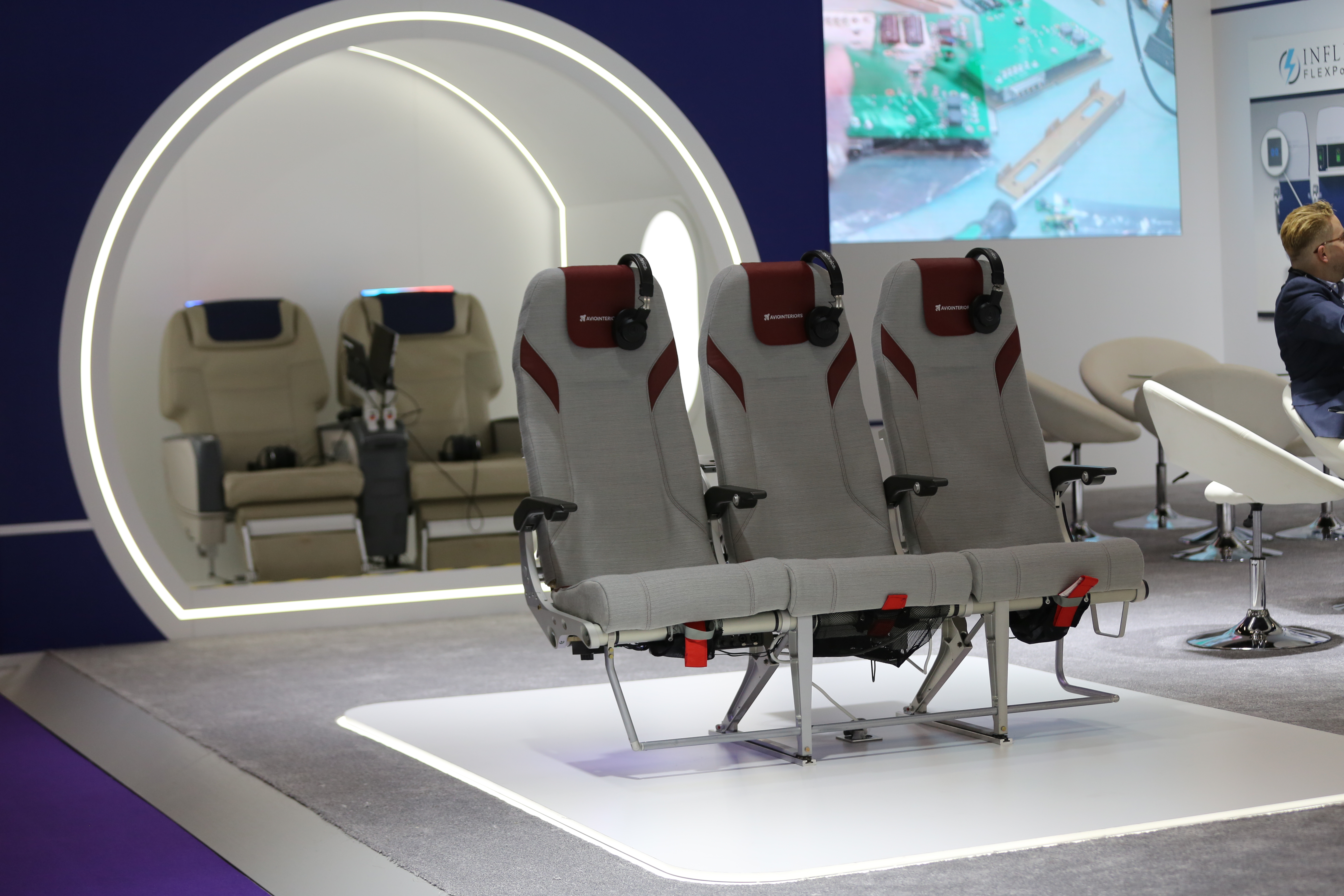
The International Day of Persons with Disabilities is about raising awareness of and celebrating the value that people with disabilities bring to our communities, highlighting actionable steps for better inclusion. With aviation and its interiors successfully balancing so many elements from comfort to safety, accessibility should remain a top priority as the industry continues to advance.
In conversations with three experts and activists leading up to this year’s observance, one theme emerged with striking consistency: the push towards accessible air travel represents far more than regulatory compliance. It is a significant market opportunity and a fundamental reimagining of what inclusive design means in practice.
True accessibility must span the entire travel experience; from navigating the airport to boarding the aircraft to reaching one’s destination. When the aircraft itself embraces accessibility, it becomes the vital link that allows all other accessibility measures to fulfil their promise, creating a seamless journey from start to finish.
The scale of opportunity
As Craig Kennedy, Programme and Training Manager for Open Doors, puts it: “The biggest things that many underestimate about the disability travel market are the sheer size of the market (more than 1bn people worldwide) and the amount of money still available to be made. From our most recent study, we know that travellers with disabilities spend about $54 billion every two years on travel. And that is flying only once every two years. Imagine if all of those people flew once EVERY year!”
Kennedy further emphasises the broader significance of reflecting upon the International Day of Persons with Disabilities within the aviation community: “For me, it represents visibility and the opportunity to remind the world that people with disabilities are everywhere and represent 25% of the population worldwide. We have money to spend, and we love to travel!”

Collaboration for inclusive design
What is particularly encouraging is the growing recognition that meaningful progress requires collaboration across the entire aviation ecosystem. Blake Emery, research-based strategy consultant and board member of All Wheels Up, explains: “Cross-industry collaboration is essential to move the needle on accessibility. It won’t happen without contributions from airlines, airframers, regulators, consumers and advocacy groups.”
It’s encouraging that several airlines are already leading the way. Kennedy notes: “There are several airlines that are going above and beyond the law by introducing policies and programmes not required by Department of Transportation (DOT) regulations. And several airlines are now participating in human centred training around the treatment of passengers with disabilities and their mobility devices.”
A particularly exciting development is the concept of “inclusive design from the start.” Emery explains this approach as “taking input from all stakeholders at the very beginning of the design process, for whatever it is you are designing. The goal is to develop products that work for all, without inadvertently leaving out large swaths of the market/population.” This approach delivers benefits beyond accessibility alone. Emery explains that, in practice, this would show up as, for example, “a lavatory in an airplane that not only works for wheelchair users but provides new benefits for non-wheelchair users as well.”
Standardisation as an enabler
Consistency is also emerging as a powerful tool for improving accessibility. Renat Anpilogov, co-founder of Your Accessible Flight, explains: “Most airports and airlines genuinely want to improve accessibility; however, they often lack accurate data, internal expertise or streamlined processes to support passengers with disabilities effectively.”
What travellers want, Anpilogov notes, is straightforward: “Avoid unpleasant surprises. Clear, consistent accessibility information is what builds trust.” He envisions “a single, industry-wide accessibility data format, similar to a ‘nutrition label’ but for accessibility” that would “eliminate contradictory information and allow passengers to compare accessibility as easily as fares.”
The standardisation Anpilogov envisions would include:”aircraft wheelchair transport compatibility in a consistent, machine-readable format, unified terminology for PRM assistance levels, standard policies for seating, service animals, mobility aids, and battery requirements, and a shared UX pattern for where and how accessibility information appears during booking.”
Moving forward
Industry is building several avenues for future momentum. Anpilogov identifies positive trends: “Strong momentum from regulators and industry bodies pushing for standardisation. Rising awareness that better accessibility directly improves passenger satisfaction and brand reputation. Clear cost savings when mobility assistance is planned correctly and proactively.”
Emery sees particular promise in new entrants: “I think the opportunity will come via new, clean sheet entrants into the aerospace market. As airframers of all sorts take accessibility into account from the very beginning, there is an opportunity for insights that can be carried over to the current commercial fleet.”
Kennedy also highlights the broader mindset shift he believes the industry must embrace. From his perspective, “As soon as the world stops seeing people with disabilities as an inconvenience and starts seeing us as a very important market segment, they will realise why access and equal treatment are so important. People with disabilities represent the largest untapped tourism market in the world.”
Rather than pushing for further regulation, Kennedy argues for a more customer-centric approach. As he puts it, “I think we need less regulation and more focus on better customer service for everyone.” However, he cautions that “the more regulations that are introduced, the more restrictive the travel environment will become for people with disabilities.”
Anpilogov reinforces the point of enhancing the travel experience all around: “Accessibility is not a niche request, it’s a fundamental part of passenger experience. When the industry invests in accessibility, it doesn’t just support people with disabilities, it improves the travel experience for everyone and strengthens the aviation ecosystem as a whole.”
The aviation industry has navigated countless transformations since that first commercial flight in 1914. As it charts the course for the cabin of tomorrow, accessibility is no longer an afterthought, it’s becoming a cornerstone of innovation, customer experience and sustainable growth. From accessible lavatories becoming standard across fleets to airlines like Emirates introducing sensory kits and enhanced in-flight entertainment with over 600 captioned movies, airlines are creating truly inclusive cabin environments.
And as we work together to build a more inclusive future for air travel, we’re reminded that the sky is not the limit.The 25th edition of Aircraft Interiors Expo (AIX) will take place at the Hamburg Messe in Hamburg, Germany, from 14–16 April 2026. The event will be co-located with the World Travel Catering & Onboard Services Expo (WTCE), following the Passenger Experience Conference (PEC) on Monday 13 April. For more information or to register for AIX 2026, visit the AIX website.